GlassCathedral.Sunlight does the heavy lifting.
"Every season has a window. We build the glass around it."
Springseason.
March light returns through the glazing — seedlings and rooted clones transferred to raised beds as DLI climbs past 20 mol/m²/day. Root zones stay at 68°F while ambient tracks the sun.
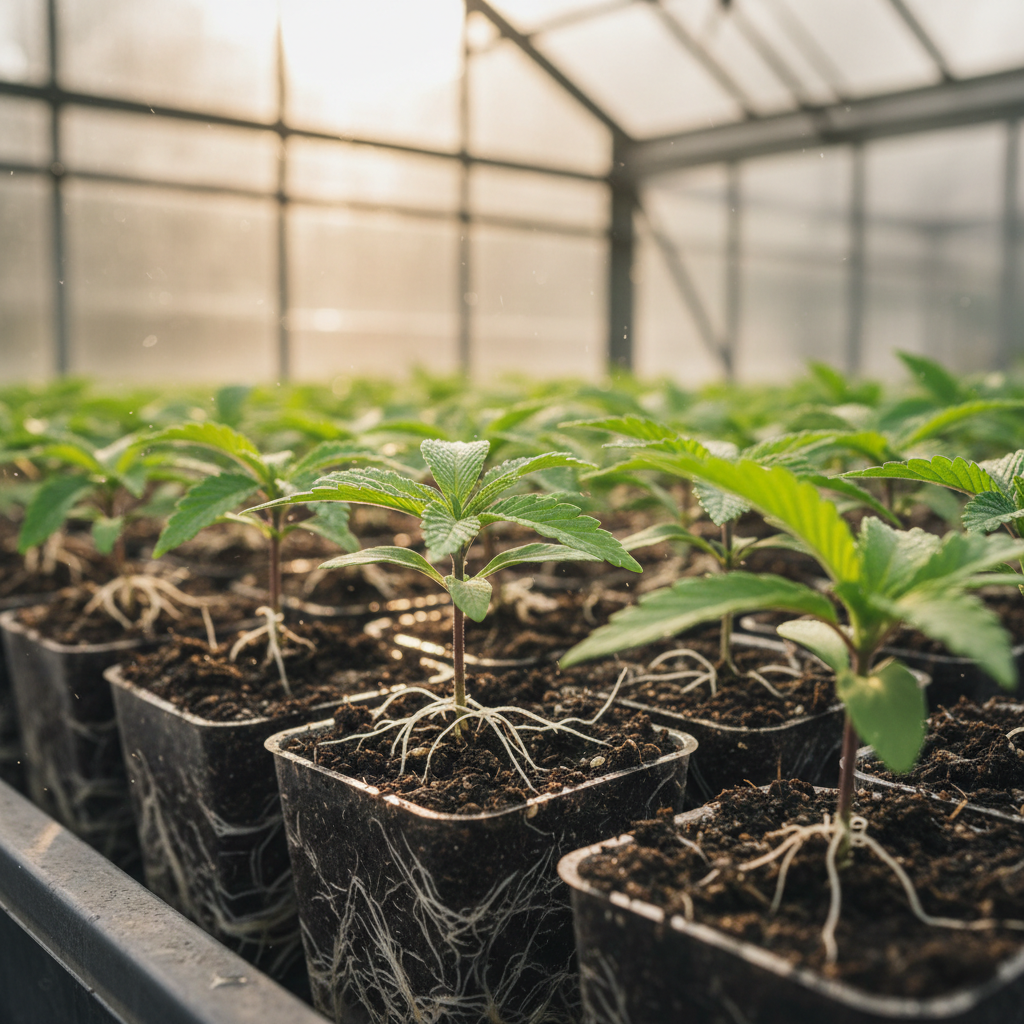
Clone transplant day — rooted cuttings staged for bed placement
Clone transplant day — rooted cuttings staged for bed placement
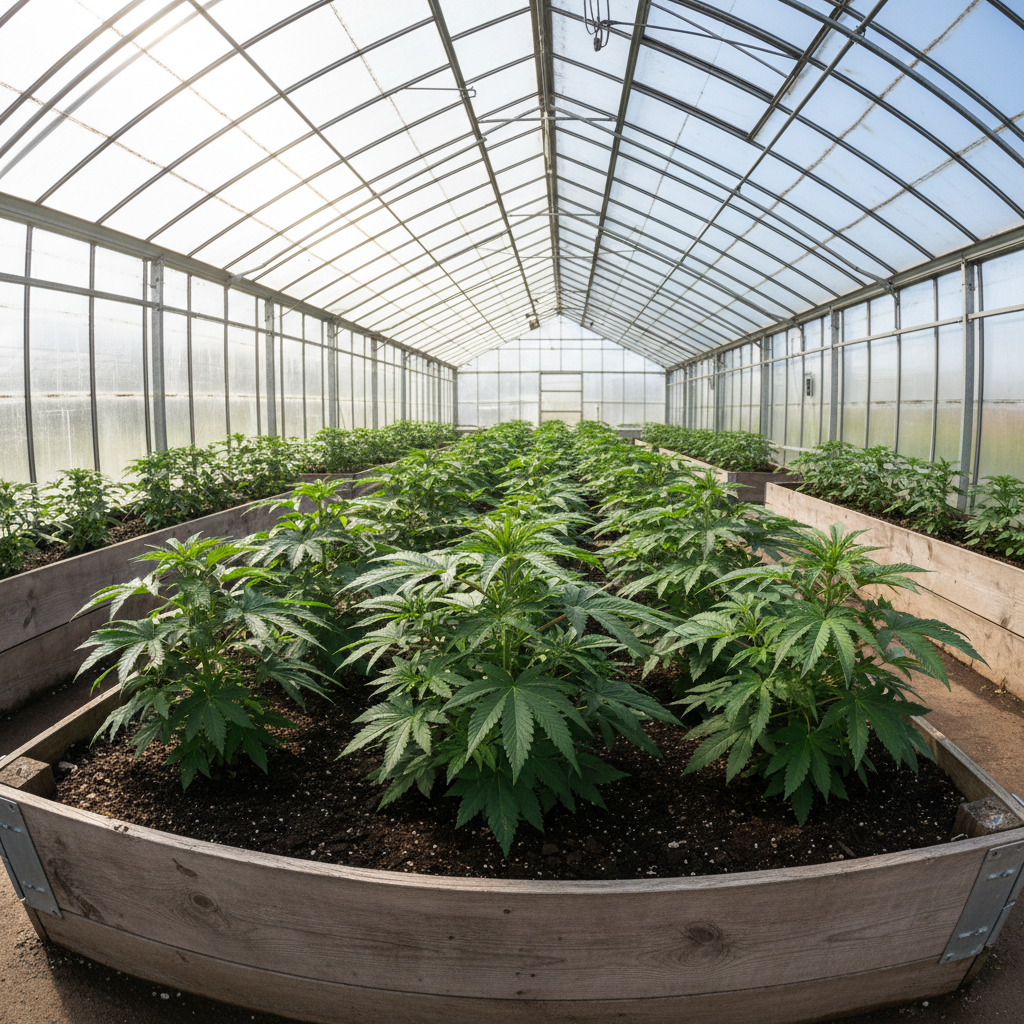
Week 2 root establishment — canopy just beginning to close
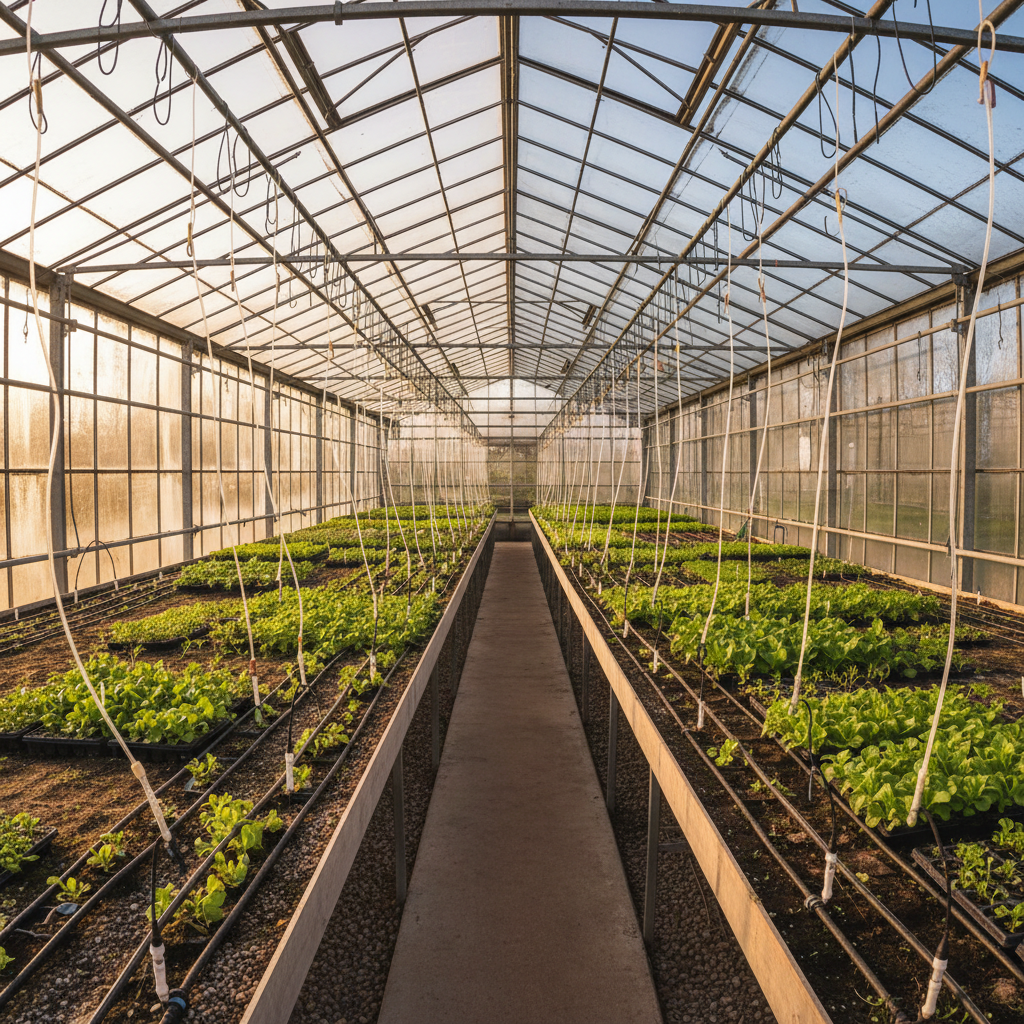
Drip irrigation calibrated to VPD — no guesswork in the root zone

Morning condensation reads as humidity — the glass does the work
Summerseason.
June through August: 16+ hours of usable light, DLI peaks at 55–65 mol/m²/day. Ridgeline vents open at 6am, horizontal airflow fans maintain the VPD curve as canopy fills wall to wall.
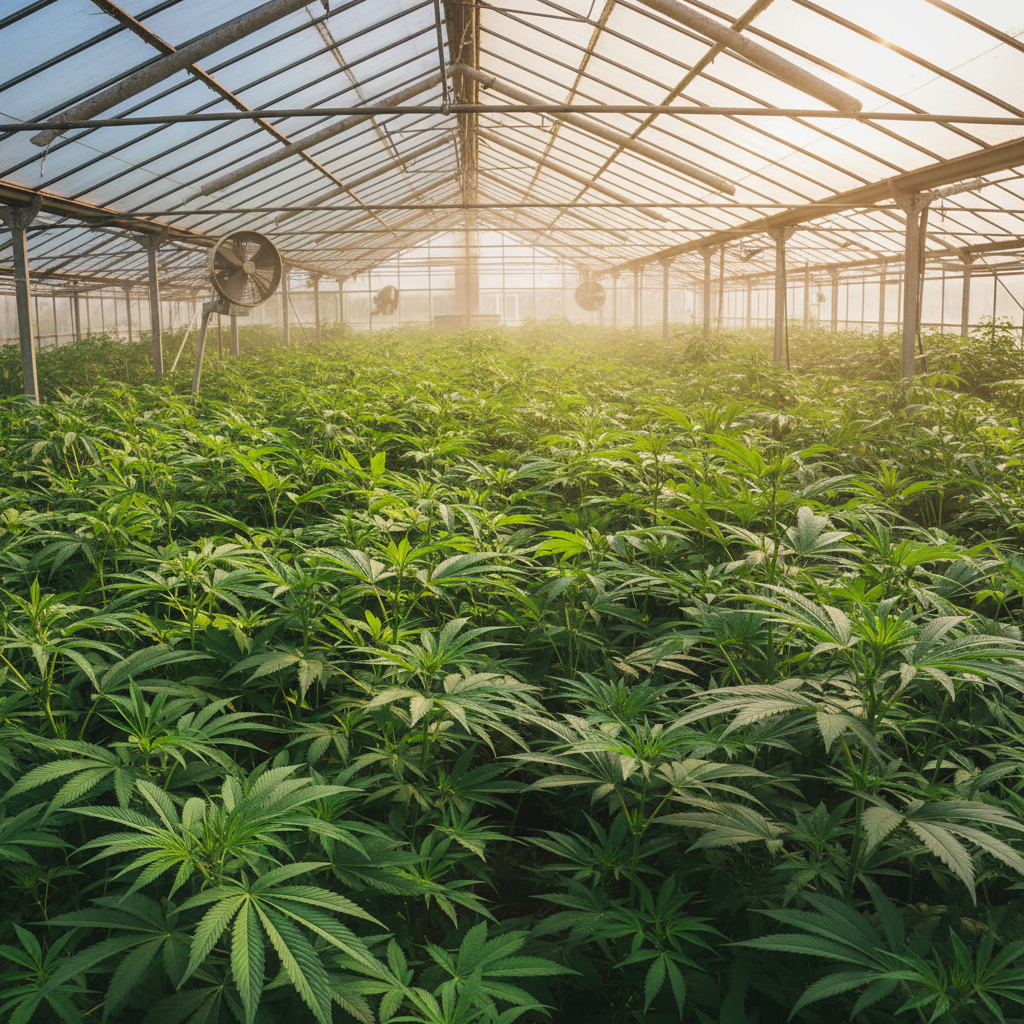
Week 10 canopy — wall-to-wall coverage, fans barely visible in the haze
Week 10 canopy — wall-to-wall coverage, fans barely visible in the haze
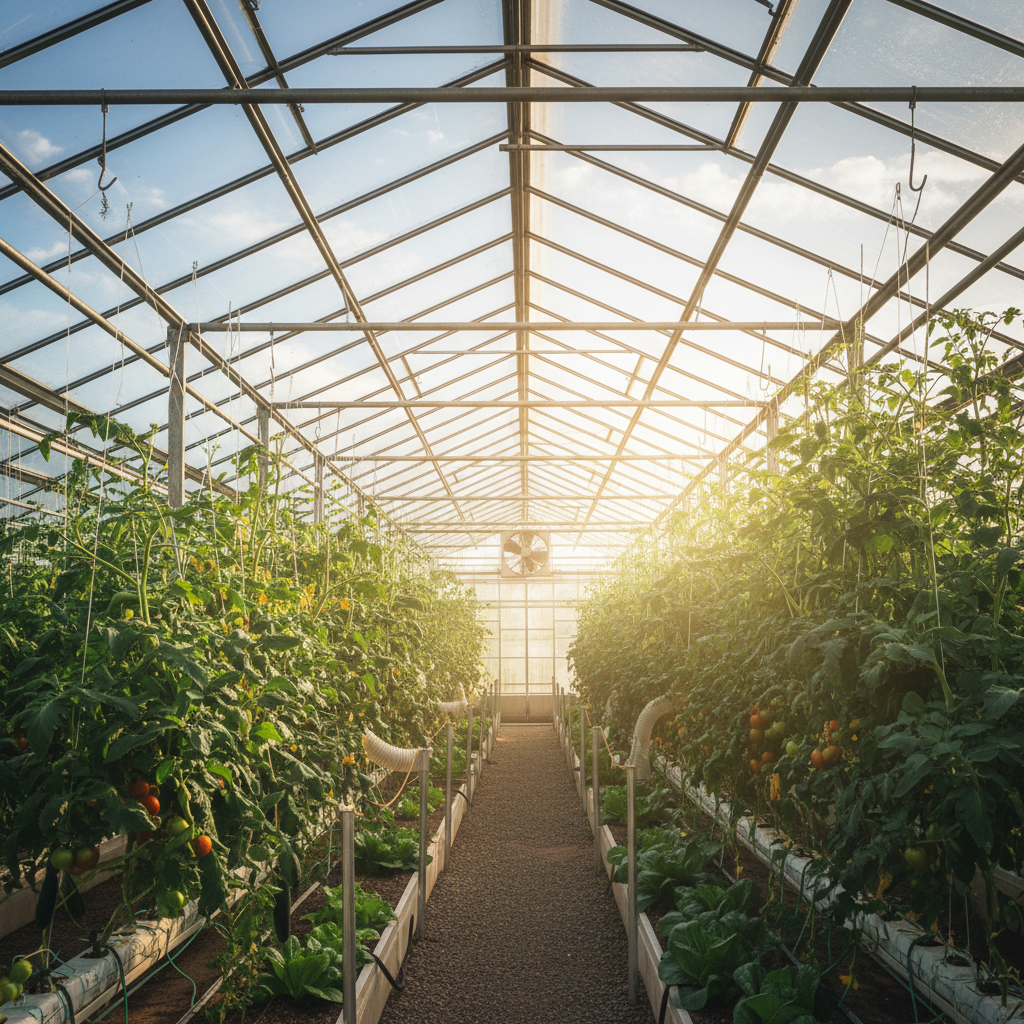
Ridgeline vents open at 6am — passive airflow before fans engage
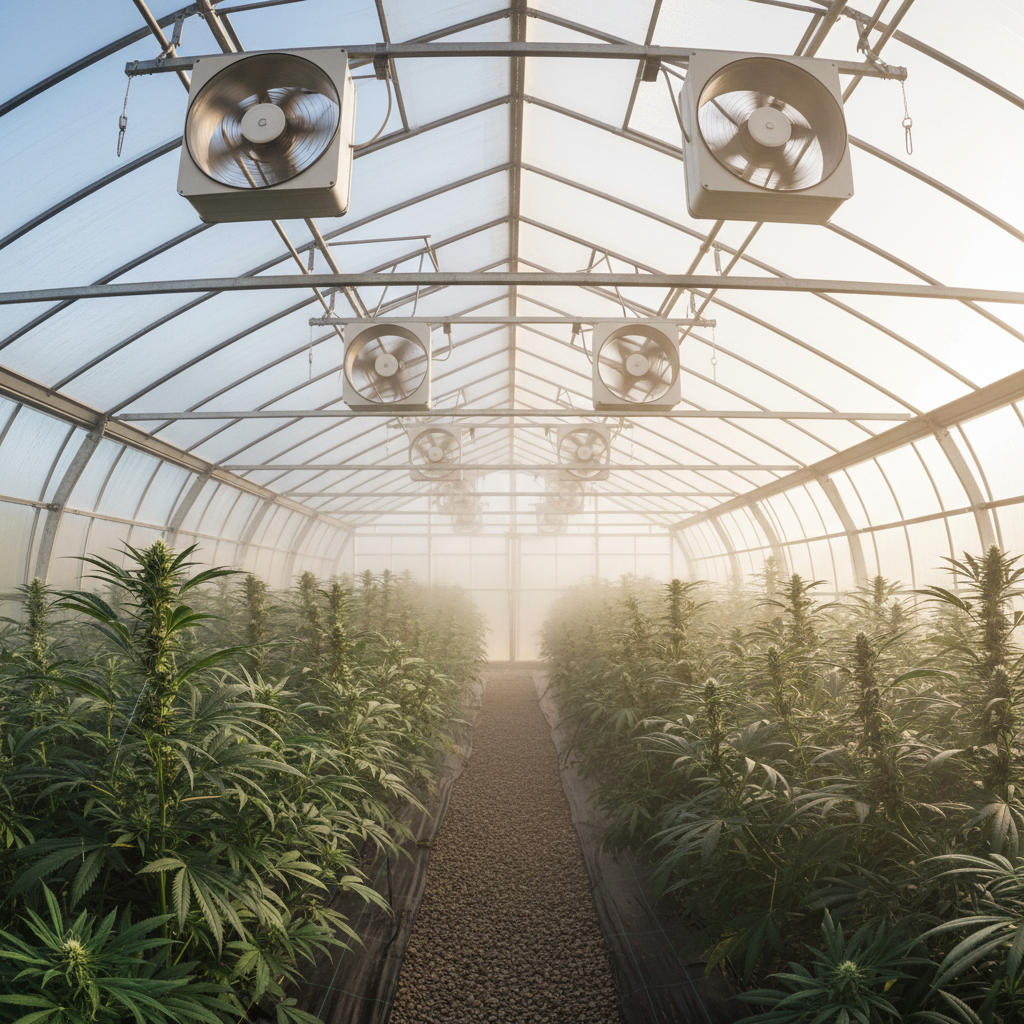
Horizontal airflow — stem strengthening without mechanical stress

Internodal spacing tightens under real-spectrum sun — structure that holds flower weight
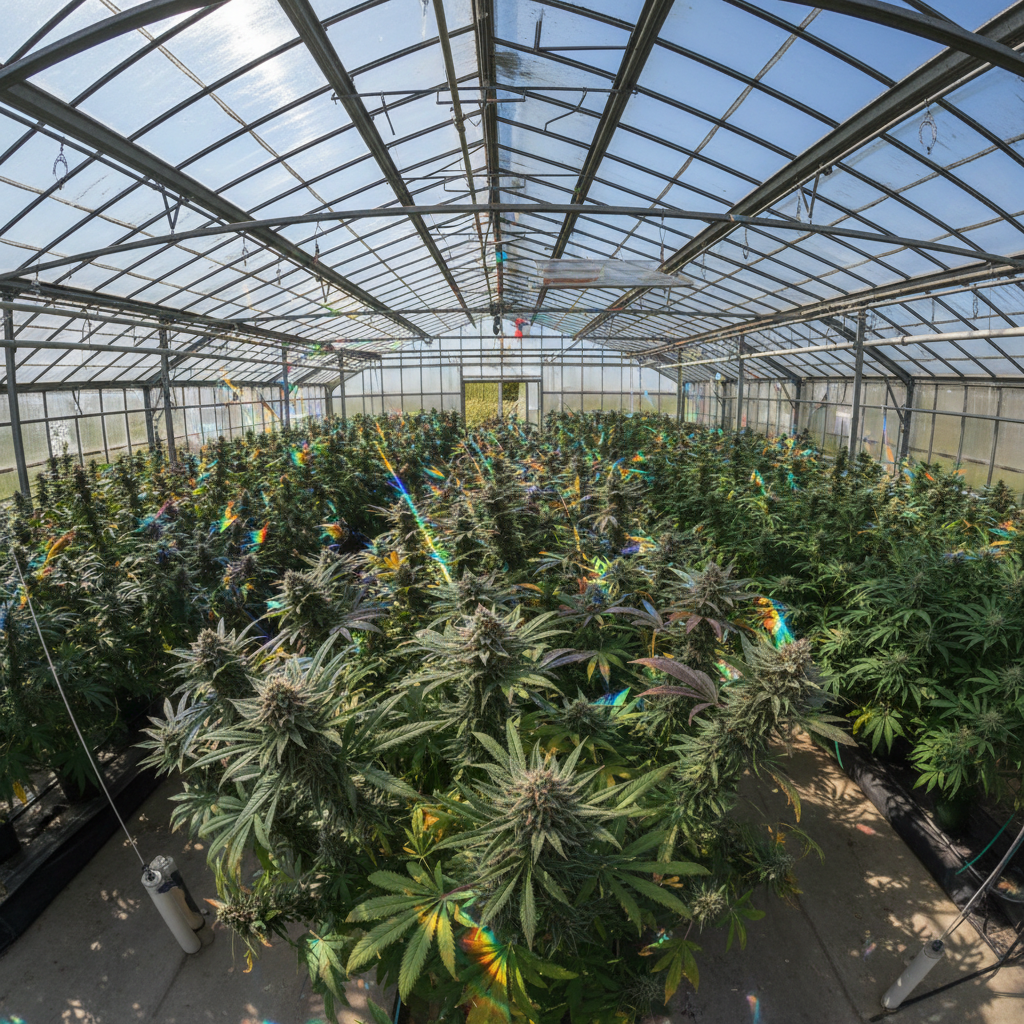
Full-spectrum refraction — no PAR correction needed, the sun self-corrects
Autumnseason.
September shortens the photoperiod naturally. Flower sites swell as amber pistils overtake white. Trichome density rivals the best indoor runs — at a fraction of the energy bill.
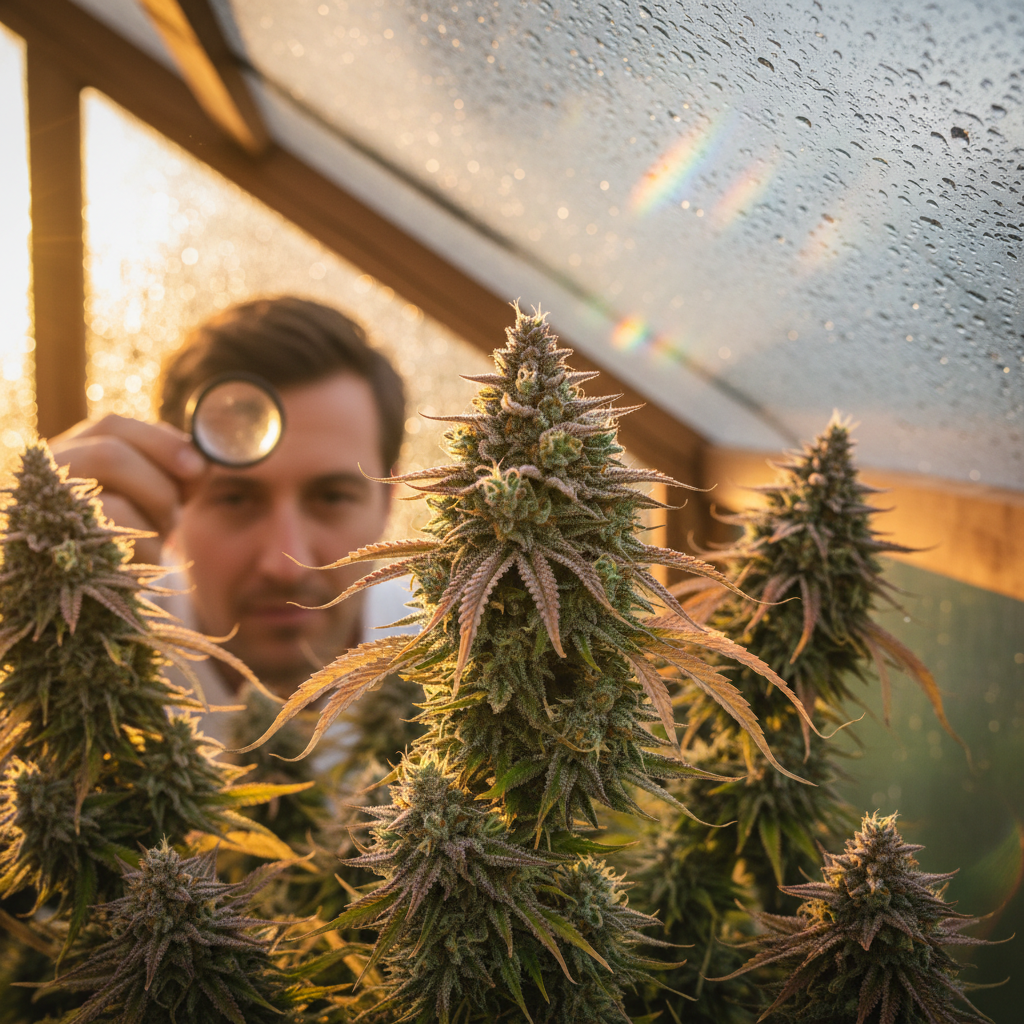
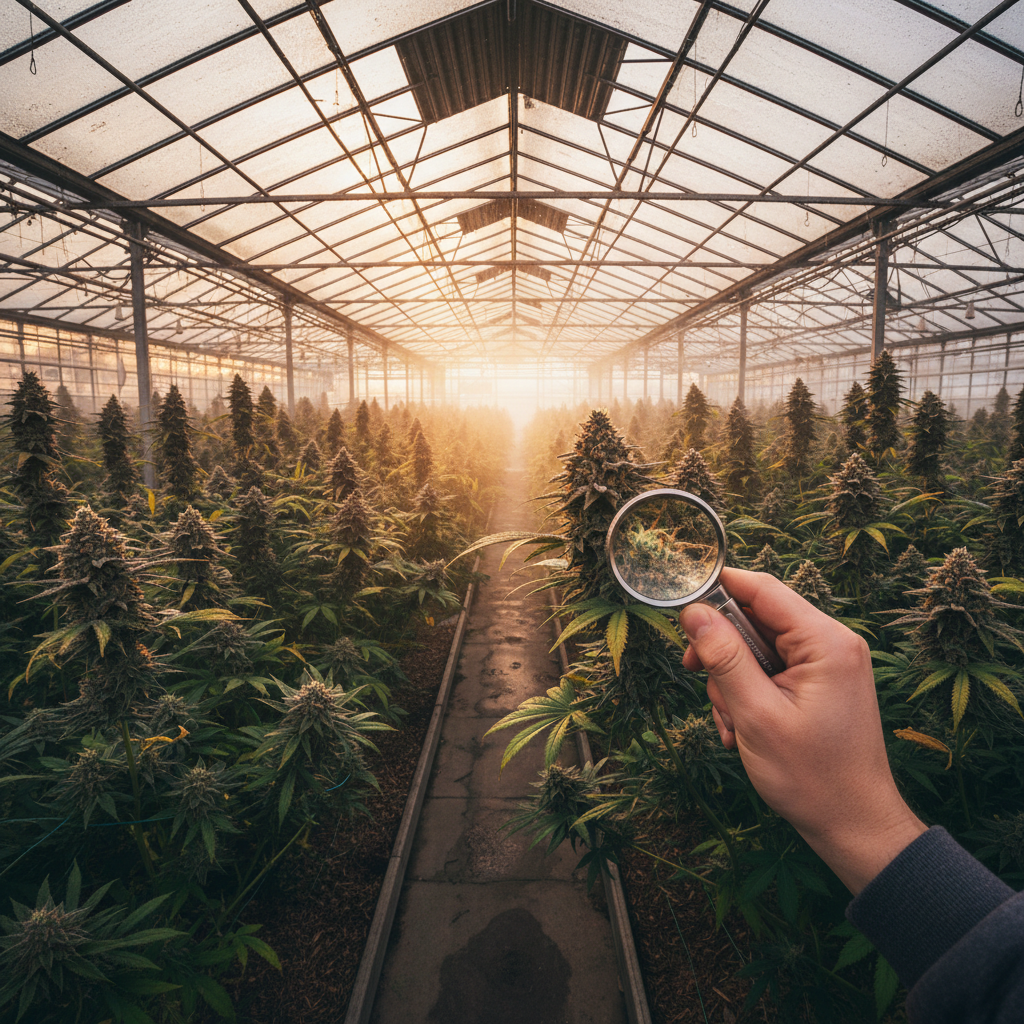
Late flower — swollen calyxes, amber pistils, a grower's hand with a loupe
Late flower — swollen calyxes, amber pistils, a grower's hand with a loupe
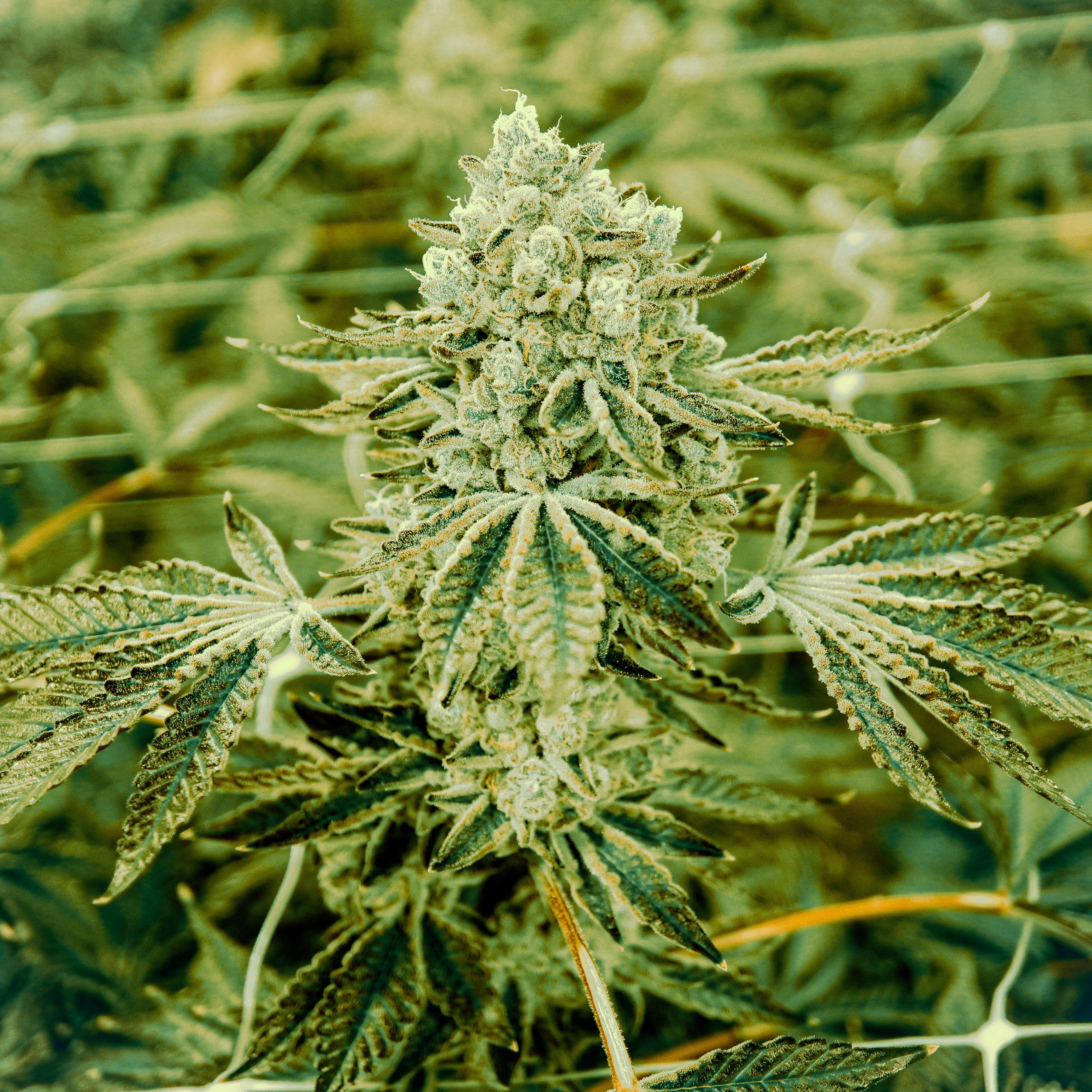
Trichome check — milky-to-amber ratio confirms harvest window
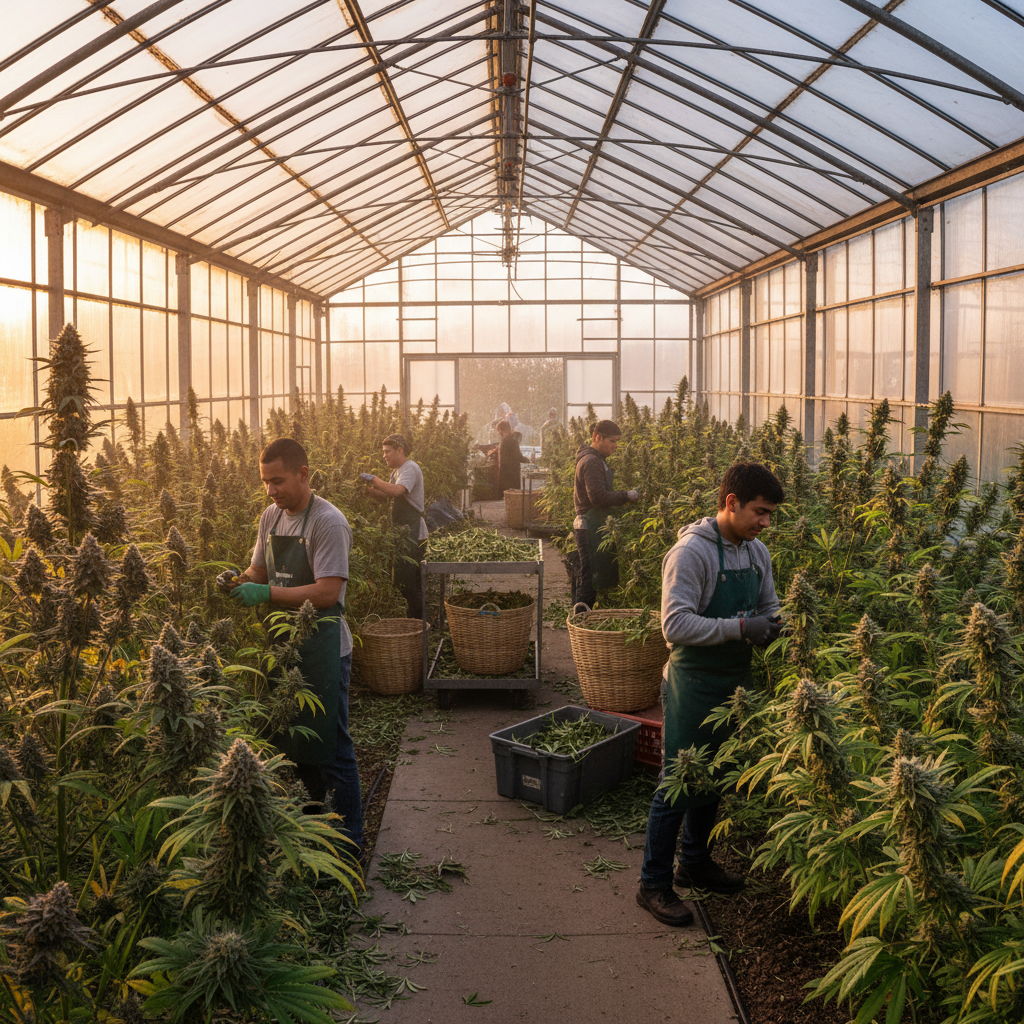
Harvest day — weight per plant tracks 18% above prior indoor cycle
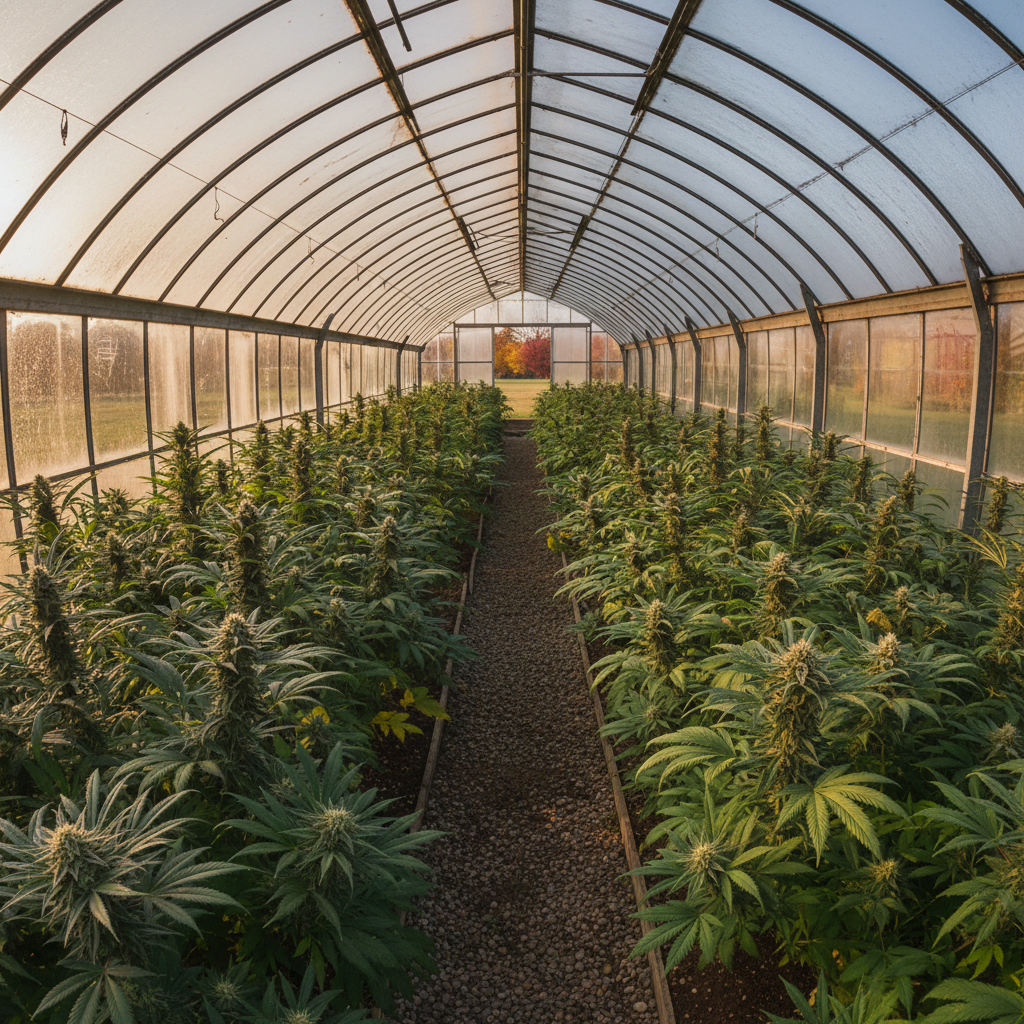
Rows at peak — calyxes swollen, fans off, the quiet before harvest
You've seen what the glass produces. Ready to build yours?
Configure your greenhouse model — size, glazing spec, ventilation profile, and VPD control package.
Winterseason.
December through February: the greenhouse rests. Deep-clean protocols, structural inspection, glazing resealing, and system calibration. Every spring starts from a clean baseline.
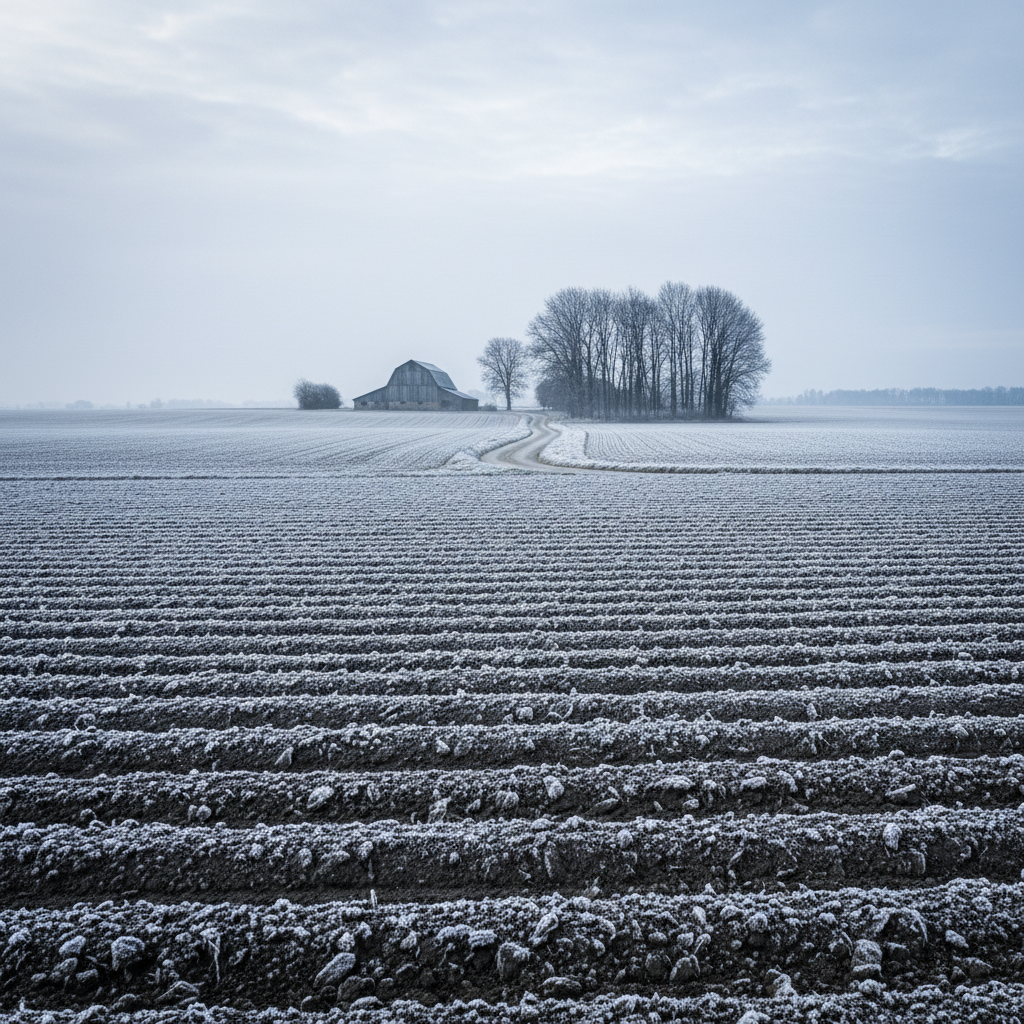
Post-harvest deep clean — empty beds, sealed glazing, full reset
Post-harvest deep clean — empty beds, sealed glazing, full reset
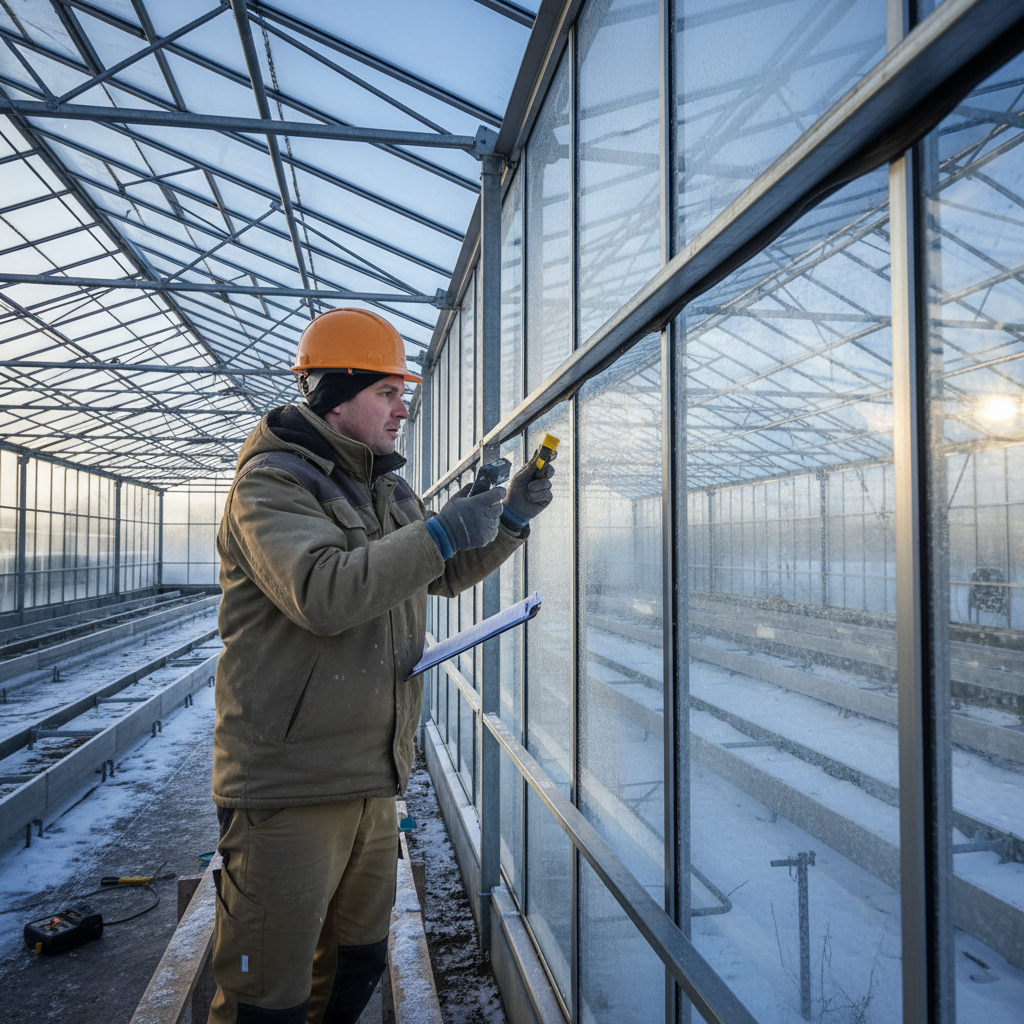
Glazing inspection — every panel sealed before the next photoperiod
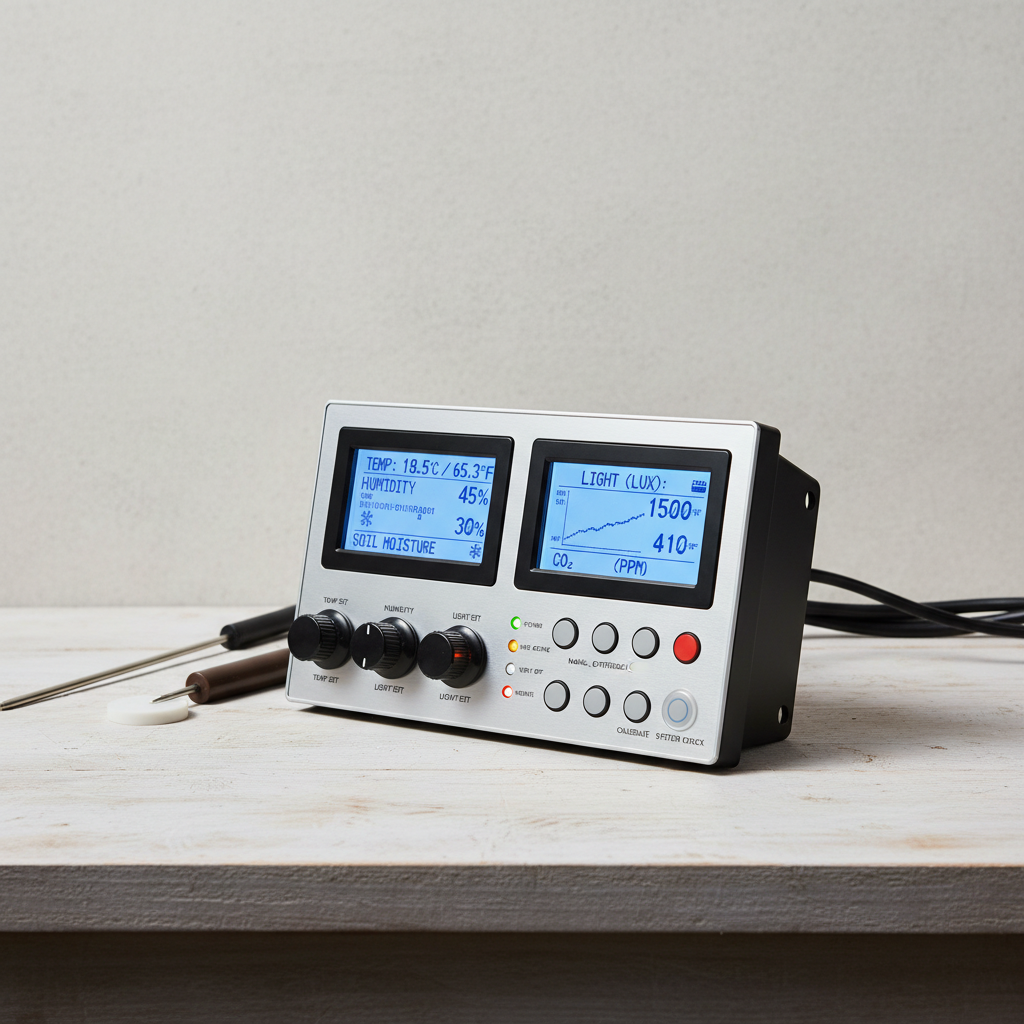
System calibration — sensors zeroed, climate profiles loaded for spring
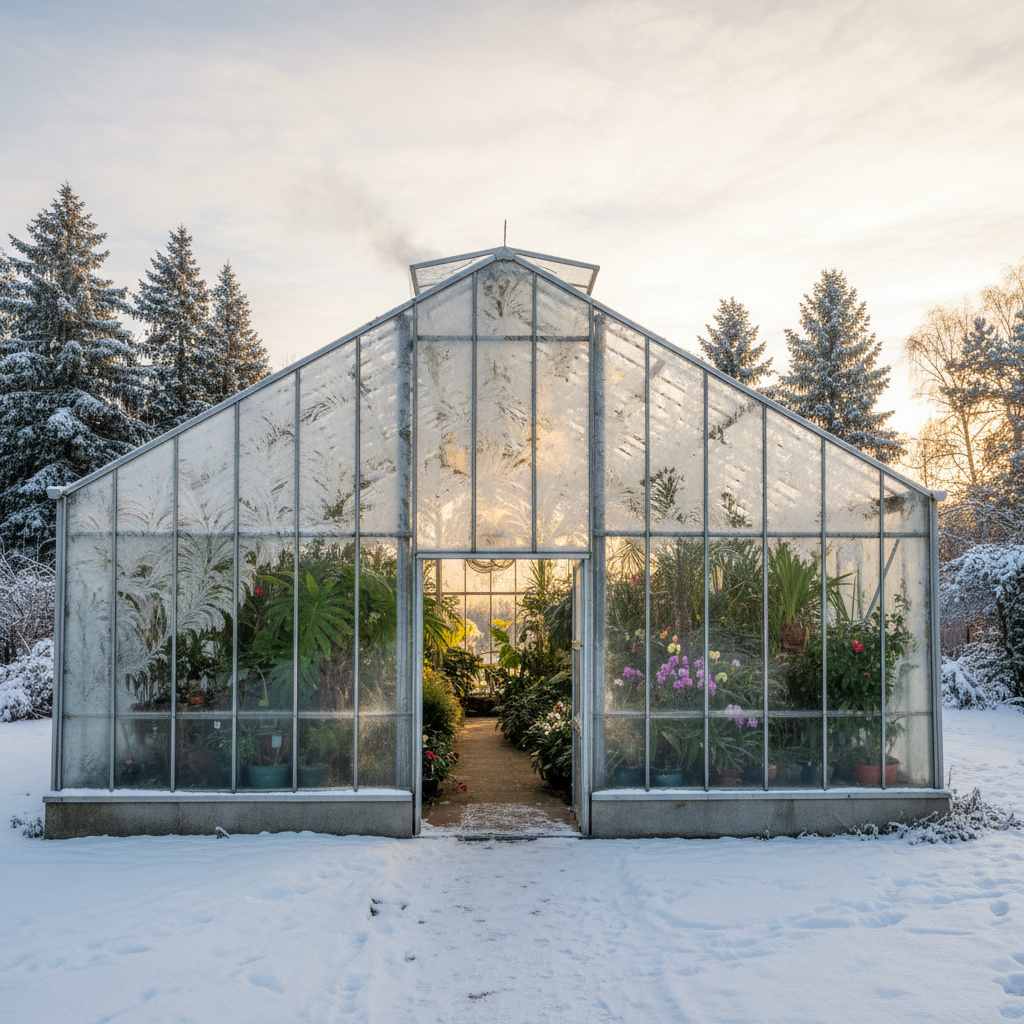
Frost on the glass — the structure holds, the next season waits
Build the glass around your operation.
Three configurations for three scales of cultivation. Each is a starting point — every Canopy build is spec'd to your site, cultivar mix, and energy targets.
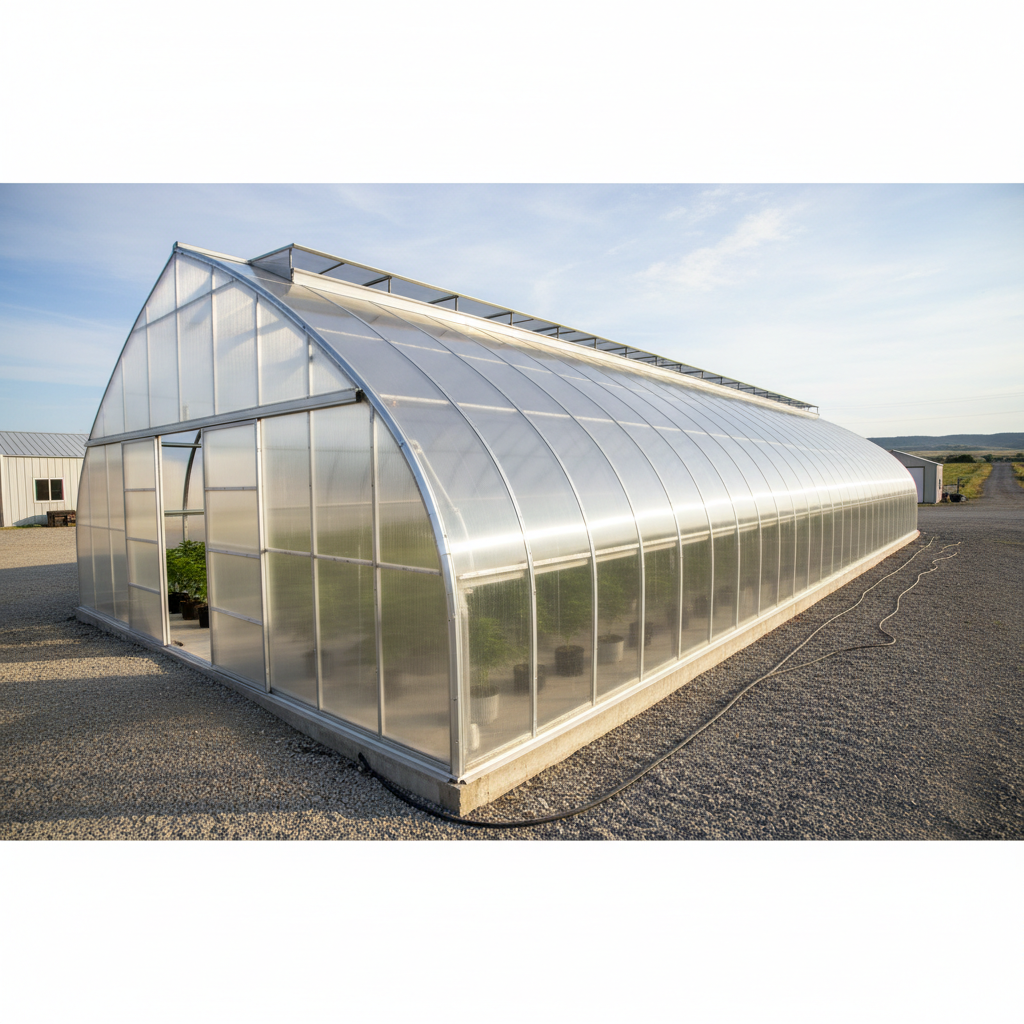
ClearSpan Series
Single-bay polycarbonate construction with manual ridge vent, drip irrigation, and basic VPD monitoring. Built for craft operators moving their first canopy out of indoor.
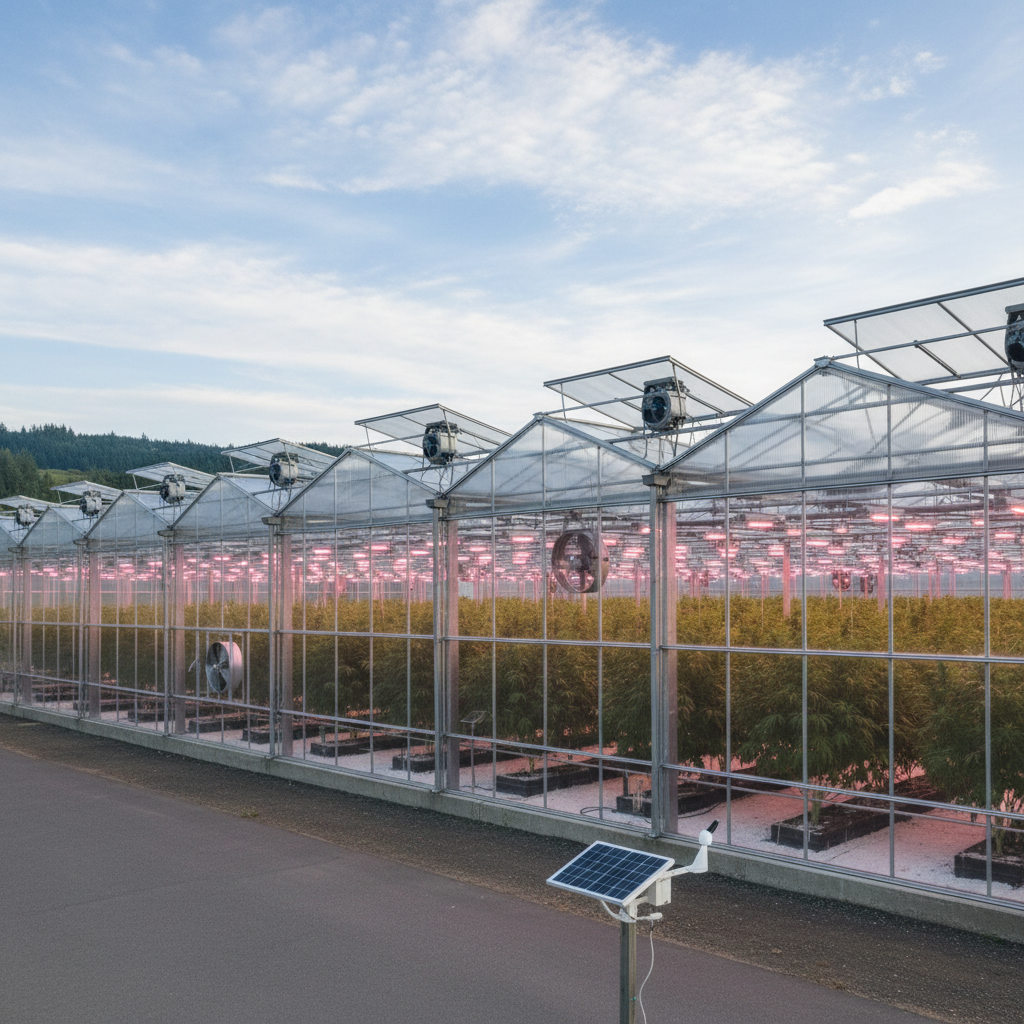
Ridgeline Pro
Multi-bay aluminum frame with automated ridge vents, CO₂ injection, full VPD control package, and supplemental LED for photoperiod extension. The workhorse for scaling operators.
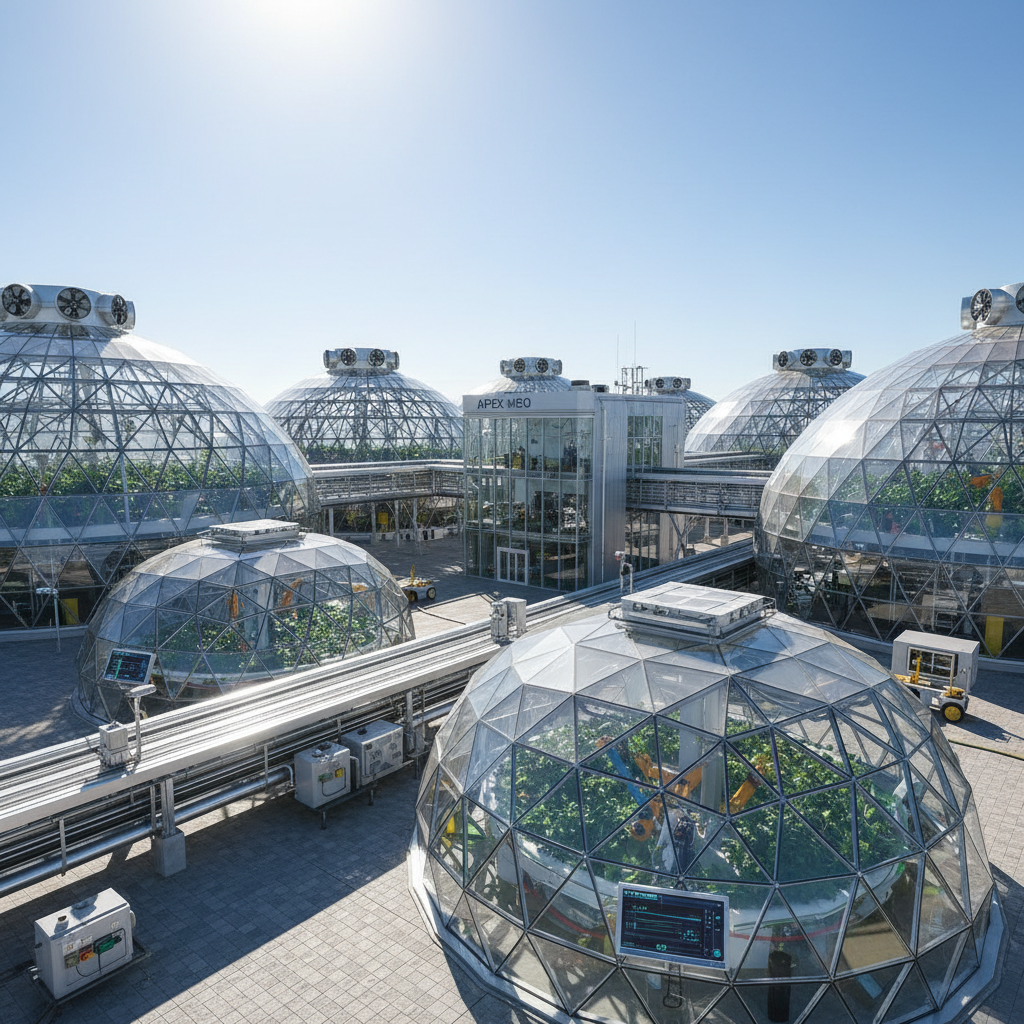
Apex MSO
Multi-structure glass cathedral with climate-zone segmentation, fully automated environmental controls, and Canopy's proprietary harvest-timing algorithms. Built for multi-state operators.
Indoor vs Greenhouse.
The real comparison.
Multi-state operators running the numbers against their indoor facilities. These aren't projections — they're pull-sheets from licensed Canopy clients across three growing seasons.
Energy Cost per Gram
kWh per Sq Ft / Year
HVAC Load (Summer Peak)
CO₂ Footprint per Cycle
Download the full Energy Savings Report.
48 pages. Three full growing seasons. Side-by-side energy audits from six licensed facilities that converted from indoor to Canopy greenhouse infrastructure.
- Full kWh breakdown by stage and season
- VPD control cost analysis vs indoor HVAC
- Yield-per-watt comparison across 12 cultivars
- ROI timeline for 5,000–50,000 sq ft builds
Who grows in
Canopy glass.
Licensed cultivators at every scale — from 2,000 sq ft craft operations to multi-state operators managing 200,000+ sq ft of licensed canopy.
Moved two of our Colorado facilities to Canopy glass in 2023. Energy bills dropped 74% in the first full cycle. Trichome density on our OG Kush held — lab results were within 3% of our indoor numbers.

Marcus Delgado
Head of Cultivation · Summit State Cannabis Co.
Denver, CO
Craft grows live or die on terpene expression. I was skeptical — everyone says greenhouse is a compromise. It's not. The full-spectrum sun actually improved our limonene numbers. We're not going back.
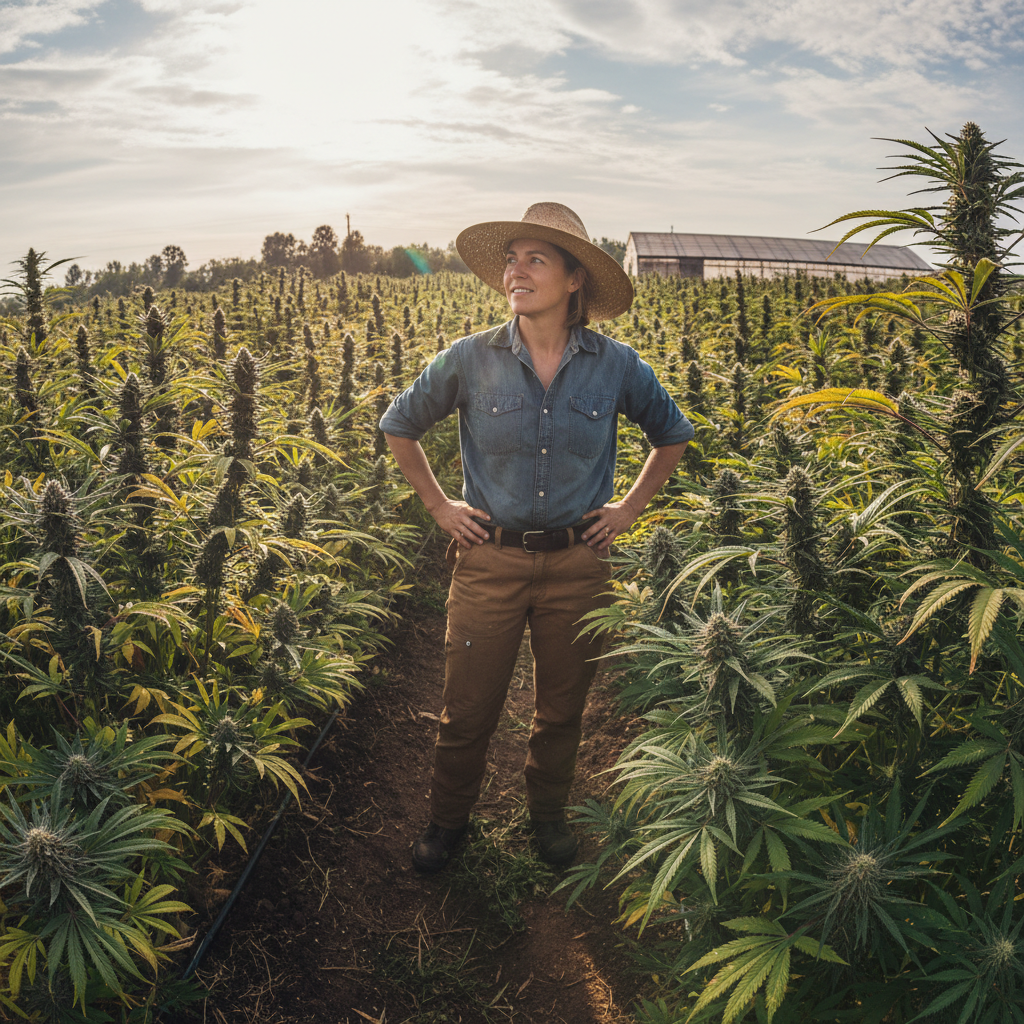
Priya Nambiar
Owner & Master Grower · Verdant Roots Collective
Humboldt County, CA
As an MSO running six states, energy cost is an existential question. Canopy's VPD control package gave us the same dialed environment we had indoors. The ridgeline vent automation is genuinely impressive.

Jordan Whitfield
VP of Operations · Elevate Multi-State Partners
Phoenix, AZ